
Alquion aims to make green hydrogen 25 percent cheaper
The Netherlands had two companies developing industrial electrolysers. Since 2 April 2026 it has one. On that day Battolyser Systems of Schiedam and VDL Hydrogen Systems of Eindhoven finalised the merger they announced in the summer of 2025. The new name is Alquion, the company has over fifty employees and keeps sites in the Rotterdam and Eindhoven regions.
The ambition the new company puts on the table straight away is concrete: cut the cost of green hydrogen in the Netherlands by up to 25 percent. That would let domestically produced hydrogen compete with imports. Behind Alquion stand VDL Groep, Innovation Industries, Global Cleantech Capital and Invest-NL. The chief executive is Mattijs Slee, previously at the helm of Battolyser Systems.
Why this is more than a merger notice
The combination is striking: a technology company that grew out of Delft University of Technology joins the hydrogen arm of one of the largest industrial family businesses in the Netherlands. Battolyser brought innovation and venture capital — it had raised some €70 million — while VDL brings the muscle of series production and procurement. Stack assembly, the heart of an electrolyser where water splits into hydrogen and oxygen, moves to VDL.
Slee is matter-of-fact about the reasoning: "The real competition is in China." Two Dutch players separately taking on Chinese scale production will not make it. Together they have a chance.
Where that 25 percent comes from
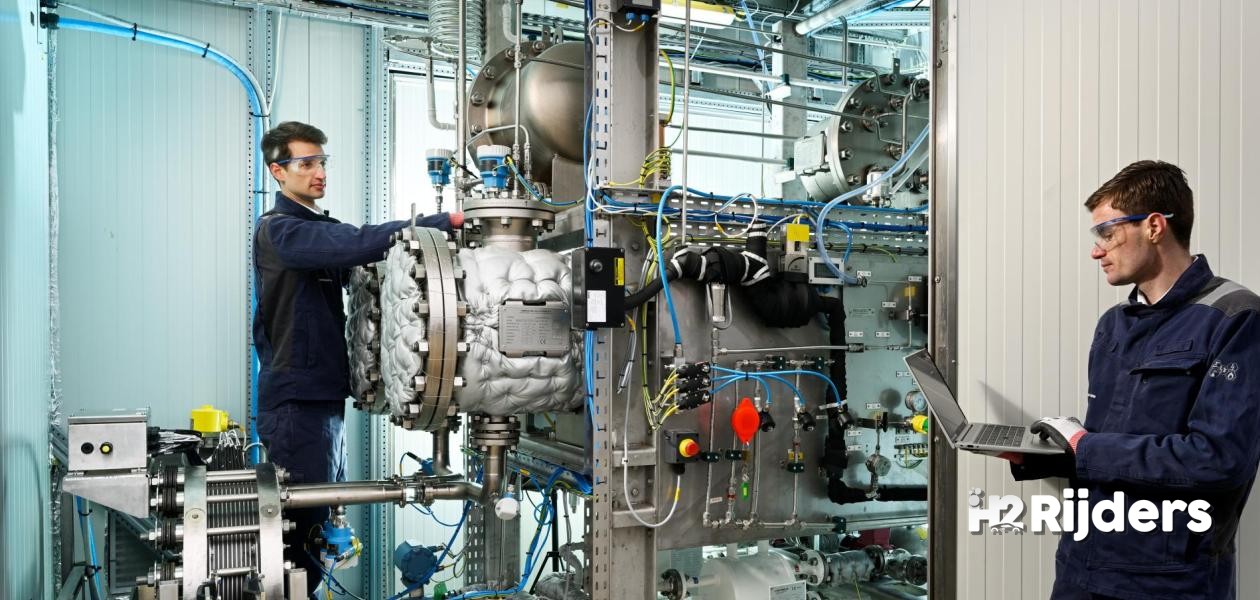
The product at the centre of it all is the Flexolyser: a pressurised alkaline electrolyser that is fully flexible. That word deserves explanation, because it is where the saving sits.
Most industrial electrolysers today must keep running at a minimum of twenty to forty percent of capacity. Drop below that and performance or safety suffers. In practice such an installation needs a steady supply of power — precisely what sun and wind do not deliver, and precisely what makes electricity expensive.
According to Alquion the Flexolyser can run at any load and be switched on and off without loss of performance. When the wind blows hard and electricity is plentiful and cheap, the plant runs flat out and makes hydrogen. When the wind drops or power is scarce and expensive, it shuts down and previously produced or imported hydrogen is supplied instead. Buying only during the cheapest hours pushes the cost down — and that is where the 25 percent claim comes from.
What that means for the power grid
Here the story touches a Dutch problem almost every business now runs into: grid congestion. The network is full, connections take years, and at the same time renewable electricity is curtailed on windy and sunny days because there is briefly too much of it.
An electrolyser that can breathe along with those peaks turns from a power consumer into something closer to a traffic controller between wind farm and grid. Alquion therefore stresses that the saving is achieved without causing additional grid congestion. That is an important addition: cheap hydrogen that clogs the network further would solve little.
From an Edison battery to an electrolyser
The Battolyser name disappeared with the merger, but the story behind it is too good to leave out. The battolyser combined a nickel-iron battery — a Thomas Edison invention from more than a century ago — with an electrolyser. That battery had a quirk: once fully charged it started producing hydrogen and oxygen. For Edison this was an annoying side effect. Delft professor Fokko Mulder saw a function in it: a single device that both stores electricity and makes hydrogen, built from abundant materials rather than scarce metals.
Alquion has since dropped that battery function and focuses entirely on the flexible electrolyser. That is a choice for focus: one product good enough to sell industrially, rather than two functions getting in each other's way. The underlying idea — that hydrogen production should follow the rhythm of sun and wind — has stayed, and was the core from the start.
The road to real megawatts
Alquion is at the beginning. An investment decision on a 0.5 megawatt demonstration system at an industrial customer was scheduled for May 2026. A first installation of five to ten megawatts follows, with 2029 to 2030 as the target window. The broader Dutch electrolyser supply chain is seeking around €300 million in investment; in the summer of 2025 the government already distributed €700 million in subsidies across eleven hydrogen producers.
Slee keeps expectations realistic. Offshore wind took roughly twenty years to bring costs down substantially; for hydrogen he reckons on decades rather than years. "The red carpet for start-ups has been rolled up again," he says of the investment climate. At the same time the motivation has shifted: where five years ago everything was measured against climate impact, the conversation is now just as much about Dutch earning power and strategic independence.
Why this matters for hydrogen drivers too
An electrolyser sits a long way from the fuel nozzle, but it determines what comes out of it and at what price. Every cubic metre of green hydrogen — for a fuel cell, for a hydrogen combustion engine, or as feedstock for synthetic fuel — starts at an installation like this. Make it cheaper and more flexible and the whole chain behind it becomes more feasible.
So we see it as good news that this technology stays in the Netherlands and that innovation and manufacturing strength are finding each other here. Alongside battery-electric driving, hydrogen is a second route to zero-emission mobility, and that route begins at the electrolyser. That a Dutch company wants to build one in a way that relieves the crowded grid rather than burdening it further only makes it more interesting.
Sources
- VDL Groep – Battolyser Systems and VDL Hydrogen Systems continue together as Alquion (2 April 2026)
- Industrielinqs – Nieuw fusiebedrijf Alquion zet in op volledig flexibele elektrolyser (2 April 2026)
- Solar & Storage Magazine – Fusie Battolyser en VDL leidt tot nieuw waterstofbedrijf Alquion
- MT/Sprout – Battolyser en VDL-dochter gaan als Alquion industriële waterstof een push geven
- Change Inc – Fusiebedrijf Alquion wil Nederlandse elektrolyser voor groene waterstof echt op de kaart zetten
- Elektrolysermakersplatform – Battolyser Systems ontwikkelt elektrolyser met geïntegreerde batterij
- Innovation Industries and Invest-NL – Alquion portfolio


