
Plastic waste becomes hydrogen — and the carbon stays locked in solid salt
A research team from UCLA Samueli and Ewha Womans University in Seoul has published a method that converts mixed plastic waste directly into hydrogen. No pre-sorting, a purity above 90 percent, and most of the carbon ending up in a solid rather than in the air. The work appeared in the scientific journal PNAS in July.
The process is called alkaline thermal treatment, or ATT. In short: heated sodium hydroxide — the same caustic soda found in drain cleaner — reacts with the plastic in a single reactor. Hydrogen is released while the carbon from the plastic is bound up.
Sorting is no longer needed
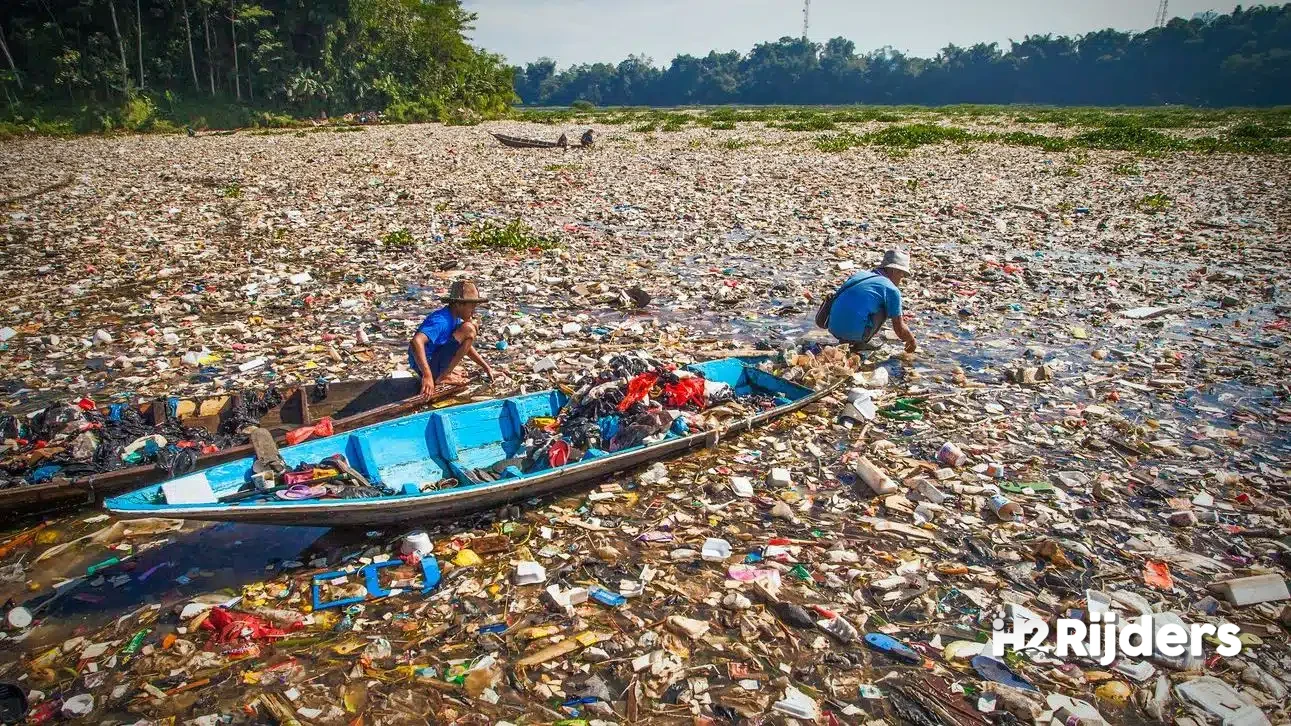
That last point may be the biggest win. Worldwide only around 9 percent of discarded plastic is actually recycled; 79 percent goes to landfill and 12 percent is incinerated. A key reason is that most recycling routes require plastic separated by type beforehand — labour-intensive and expensive.
The researchers fed PET, polyethylene (PE) and polypropylene (PP) into the same reactor at the same time. Those three account for the bulk of the waste stream, from drinks bottles to sandwich bags and yoghurt pots. They did not have to be separated.
There is a further benefit: the reaction runs at a temperature 300 to 400 degrees Celsius lower than conventional steam gasification. Less heat means less energy to keep the process going.
The carbon stays behind in the salt
Whenever hydrogen is made from carbon-bearing feedstock, the question is where that carbon ends up. In this process the sodium hydroxide captures the CO2 formed during the reaction and turns it into solid sodium carbonate — soda ash, a stable and manageable substance.
The figures from the study: more than 75 percent of the carbon from the plastic ends up as stable carbonate or as liquid organic residue. Less than 13 percent is released as gas. Carbon storage is built into the chemistry itself, with no separate capture unit bolted on the back.
Why PE and PP needed an extra step
Not every plastic gave in as easily. PET reacts fairly readily, but polyethylene and polypropylene consist almost entirely of stable carbon-hydrogen bonds that caustic soda cannot get a grip on.
The solution was a thermal oxidation pretreatment. It introduces oxygen-containing groups onto the polymer chains — attachment points the sodium hydroxide can then attack. After that, the reaction ran for all three plastics.
What this could mean for hydrogen mobility
For anyone driving on hydrogen, the interest here lies in an additional route to the tank. Green hydrogen from electrolysis remains the main road, but plastic waste is a feedstock that already exists and is currently mostly landfilled or burned. Getting double value out of it — fuel plus stored carbon — fits the principle of using raw materials sparingly.
"Plastic waste is accumulating at alarming rates, and clean hydrogen is essential for decarbonizing energy," says Ah-Hyung Alissa Park, a chemical engineer at UCLA and one of the lead authors. The research was co-conducted by professor Woo-Jae Kim of Ewha Womans University and funded by South Korea's National Research Foundation.
Still in the lab
This is emphatically laboratory work. The team itself notes that performance must improve further and that economic viability has yet to be established before commercial use is on the table. The leap from small samples to tonnes of waste per day is a discipline in its own right.
Even so, the direction is worth following. A process that takes waste as it comes, runs at a lower temperature and locks up the carbon along the way touches three problems at once.
In brief
- Research by UCLA Samueli and Ewha Womans University (Seoul), published in PNAS, July 2026
- Process: alkaline thermal treatment (ATT) using heated sodium hydroxide in a single reactor
- Handles PET, polyethylene and polypropylene together — no pre-sorting required
- Hydrogen purity: above 90 percent
- More than 75 percent of the carbon remains as solid carbonate or liquid residue; less than 13 percent is released as gas
- Runs at 300 to 400 degrees Celsius below steam gasification
- PE and PP require a thermal oxidation pretreatment
- Status: laboratory phase; scale-up and economics still to be proven
Sources
- Duurzaam Nieuws – Plasticafval verandert in waterstof terwijl koolstof wordt opgesloten
- UCLA Newsroom – New process turns mixed plastic waste directly into hydrogen fuel without sorting (July 2026)
- UCLA Samueli School of Engineering – press release on the ATT process
- PNAS – Selective and direct hydrogen generation from mixed plastic waste via alkaline thermal treatment with inherent carbon storage
- SciTechDaily – Scientists turn plastic waste into clean hydrogen fuel


