
Béziers puts thirteen hydrogen buses to work — the first is called La Diligence
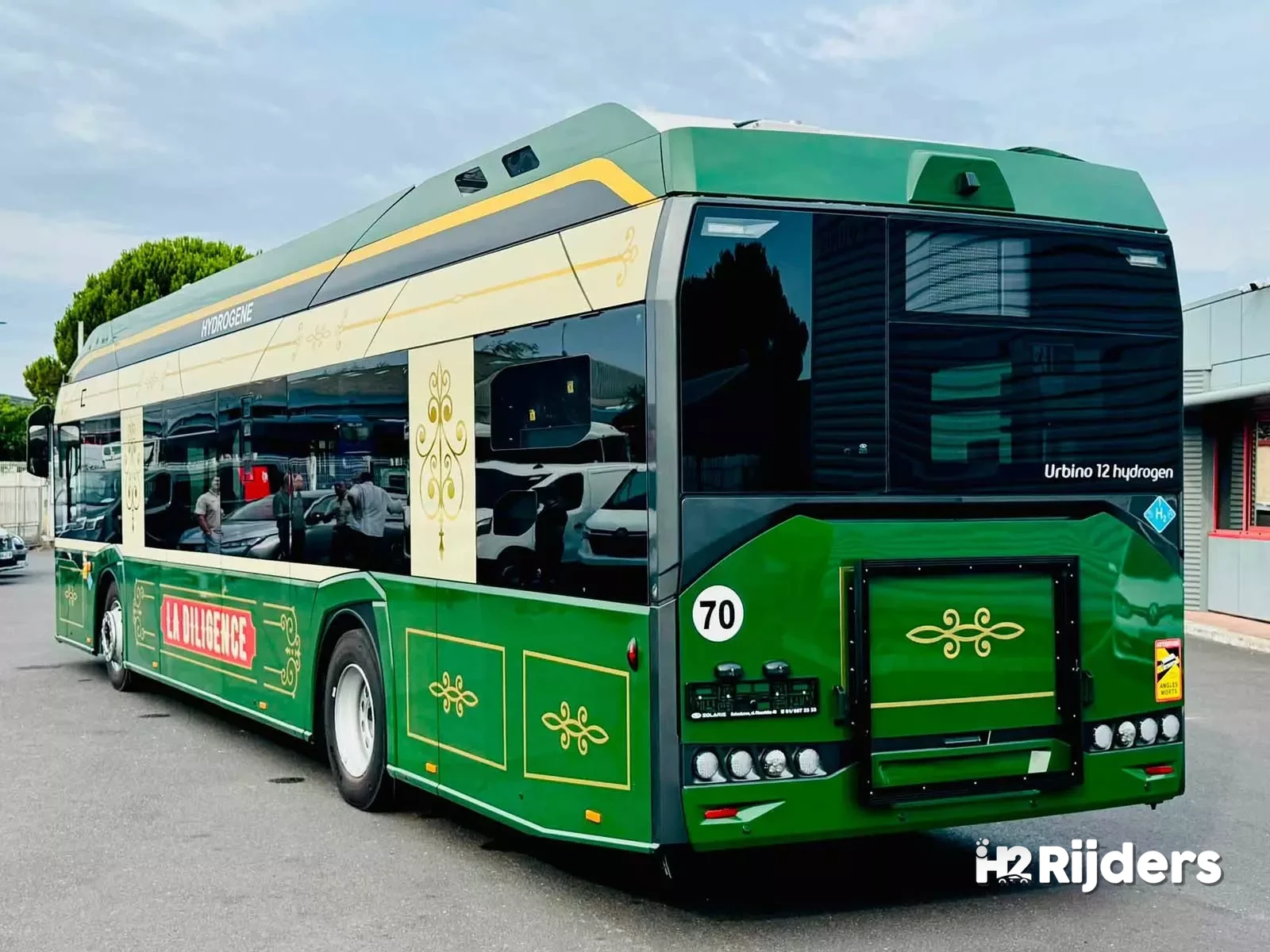
Thirteen hydrogen buses will appear on the streets of Béziers, in the French region of Occitanie, this autumn. They will run for beeMob, the transport network of the Béziers Méditerranée agglomeration, and were supplied by Polish bus builder Solaris. The first one carries a name you rarely see on a city bus: La Diligence, the stagecoach.
What is coming to the streets
The buses are twelve metres long and carry more than ninety passengers. Drive comes from a 220 kW electric motor fed by a 70 kW fuel cell mounted on the roof. That gives them over four hundred kilometres on a full tank, enough for a complete day in service without an interruption.
On board they offer what this generation of city buses is expected to have: real-time travel information, USB sockets, video surveillance and blind-spot radar. The first bus also nods to its name with a western-styled interior of imitation wood and gold-coloured trim.
Where they will run
The thirteen buses enter service this autumn on the redesigned line 1 of the beeMob network, which has been reorganised into seventeen lines. Operations are in the hands of RATP Dev.
The station that makes it work
No refuelling point, no hydrogen buses, and Béziers has had that covered since April 2026. Energy company Qair opened its first renewable hydrogen station in France that month, in the La Méridienne business zone at the junction of the A9 and A75 motorways. It can dispense up to six hundred kilos of hydrogen a day, serving not only buses but passenger cars and trucks as well.
The hydrogen itself comes from the region. The Hyd'Occ plant at Port-La Nouvelle is ramping up production towards some 2,700 tonnes a year from the summer of 2026. That keeps the chain short: generated renewably in Occitanie, pumped in Occitanie.
Who is helping pay
French environment and energy agency ADEME contributed to both sides of the project:
- 1.7 million euros for the hydrogen station
- 2.9 million euros for the thirteen Solaris buses
The station is also part of the Occitanie H2 corridor, a project backed by the European Union and the European Investment Bank. The aim is a continuous route for zero-emission transport running from the Iberian peninsula to northern Europe. Its position at the A9-A75 junction is no accident.
From demonstration to daily service
At the station opening, Qair spoke of hydrogen in Béziers moving from the demonstration phase into everyday life. With thirteen buses about to cover a full line, that is more than a figure of speech: this is regular public transport, not a pilot.
Béziers is worth noting for hydrogen drivers beyond the buses too. The station serves heavy transport as well as cars and sits right beside two motorways, making it a fixed stop for anyone heading towards Spain or the Massif Central.
Sources
- H2-Mobile, A Béziers, 13 bus à hydrogène vont débarquer, avec plus de 400 km d'autonomie, Michaël Torregrossa, 24 August 2026
- H2-Mobile, A Béziers, une nouvelle station hydrogène pour accélérer la décarbonation de la mobilité lourde, 24 April 2026
- Hydrogen Today, Qair inaugure sa station hydrogène de Béziers
- Ville, Rail et Transports, Une station à hydrogène pour les bus de Béziers
- Fuel Cells Works, French city to deploy 13 Solaris hydrogen buses, 21 August 2026


